
The Reality Check: 5 Critical Hurdles for Indian Startups in 2026
Blog post description.Is your Indian startup ready for 2026? While innovation thrives, securing funding requires unit economics, not just growth. From DPDP Act compliance and the AI talent war to saturated metro markets and infrastructure gaps, we analyze the 5 critical execution hurdles you must overcome.
MARKET INSIGHTS
Shyam Nair
3/2/20262 min read
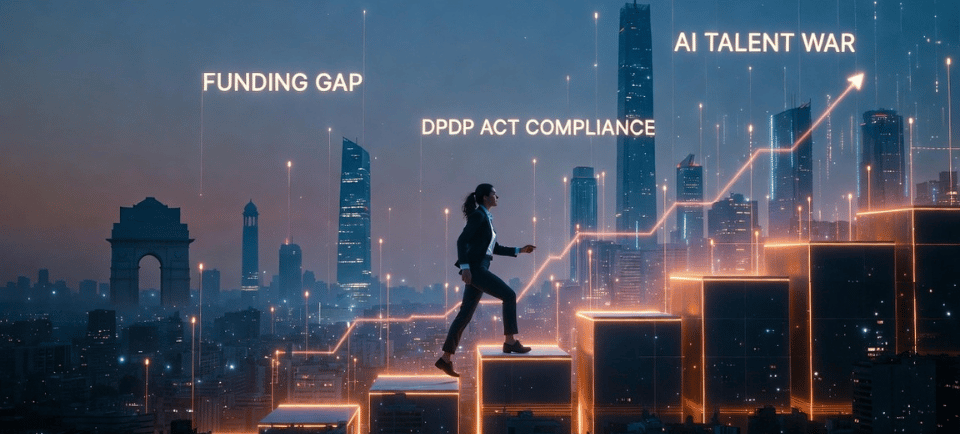
The Indian startup ecosystem has matured significantly over the last decade. While we remain a global innovation hub, the "easy money" era of 2021 is officially a relic of the past. Today, success is no longer defined by high burn rates or vanity metrics. It is defined by resilience, profitability, and sustainable unit economics. At GroRev SalesNair, we consistently see brilliant founders struggling not with their core ideas, but with the sheer complexity of execution in a tightening market.
Here are the five primary hurdles facing Indian startups in 2026:
1. The "Quality" Funding Gap
While aggregate investment figures remain high, venture capitalists have become hyper-selective. In 2026, the "spray and pray" investment model is dead. Capital is aggressively pivoting toward DeepTech and AI-native solutions that offer long-term moat protection. Startups in traditional e-commerce or generic SaaS sectors—especially those without a clear, documented path to profitability—are facing a prolonged "funding winter." Even as the government extends recognition periods for DeepTech ventures up to 20 years, early-stage startups in non-tech niches find themselves starved for the bridge capital that was once abundant.
2. Navigating the "Digital Personal Data Protection" Era
Regulatory compliance is no longer a "check-the-box" task for the legal team; it is a core product requirement. With the full implementation of the Digital Personal Data Protection (DPDP) Act and increasingly stringent RBI guidelines for fintech, startups face immense compliance burdens. Navigating these intricate laws requires proactive legal frameworks and data-sovereignty architectures. Many early-stage founders lack this specialized knowledge, leaving them vulnerable to massive penalties and investor scrutiny during due diligence.
3. The War for Specialized AI Talent
There is a massive paradox in the Indian labor market. While general software engineers are plentiful, the demand for AI implementation specialists, LLM architects, and domain-specific engineers has skyrocketed. Startups are no longer just competing with each other; they are losing their best minds to global tech giants who offer "Big Tech" compensation packages that a seed-stage or Series A startup cannot match. This talent drain creates a strategic bottleneck, slowing down product roadmaps exactly when speed to market is most critical.
4. Market Saturation and "Bharat" Penetration
The low-hanging fruit in Tier I metros has been plucked. The growth frontier has shifted to Tier II and III cities, often referred to as the "Bharat" market. However, building for Bharat requires a complete rethink of distribution economics. Founders must contend with lower Average Revenue Per User (ARPU) and higher physical acquisition costs. Moving from "persuasion" to "precision" in customer acquisition is the only way to survive. If your sales engine isn't optimized for these lean margins, the cost of customer acquisition (CAC) will eventually swallow your margins.
5. The Infrastructure-Digital Divide
India’s digital layer is world-class, but the physical layer is still catching up. Despite the nationwide 5G rollout, physical logistical bottlenecks remain a primary growth killer. Inefficient supply chains, unpredictable "last-mile" delivery costs, and rising operational overheads in manufacturing-linked startups hinder true scalability. To compete on a global stage, Indian startups must bridge the gap between their sophisticated software and the reality of aging physical infrastructure.
At GroRev SalesNair, we help founders navigate these specific pressures by building robust, high-efficiency sales strategies that turn these hurdles into competitive advantages. Success in 2026 belongs to those who prioritize structural health over temporary hype.
Your Sales Growth Partner
Subscribe
sales@salesnair.com
+91-836-877-0579
© 2026. All rights reserved.
GroRev SalesNair